It started with me
Like most of what I make, SuperPosition began as something I built for myself. I keep the sensitive parts of my work in a vault, and I talk to AI every day to sort my priorities, my communications and my ideas. Somewhere along the way I realized the method was worth more than the files. Other leaders could use it, in real time, on their own work.
Superposition, not substitution
Most AI products sell you a stand-in: an agent that clears your inbox, writes the pitch and books the trip, as long as you hand everything over and learn to work its way.
SuperPosition is the opposite. When two waves overlap, neither one disappears. They add. This system lays more perspectives over your own and never stands in for you. It brings options, in the format you ask for, and hands every decision back.
It is a Chief Operating System: a thing, not a person. There’s no interface to learn and no settings to set. You say what you want in plain words, and it adapts to how you already work.
It works with your people
A leader’s week is all over the place, which is why they need this. Most of them already have an EA, a chief of staff, or both. SuperPosition is built to work with those people, not around them.
A common starting point: the EA gets the calendar, and strategy stays private to the leader. But defaults don’t need to stay defaults. The system is meant to flex as trust grows.
It is not designed to replace anyone. It makes a person better informed, and it takes some of the tedious work away. That’s as true for an EA or a chief of staff as it is for the leader. A savvy one may want a SuperPosition of their own.
Plastic Personas
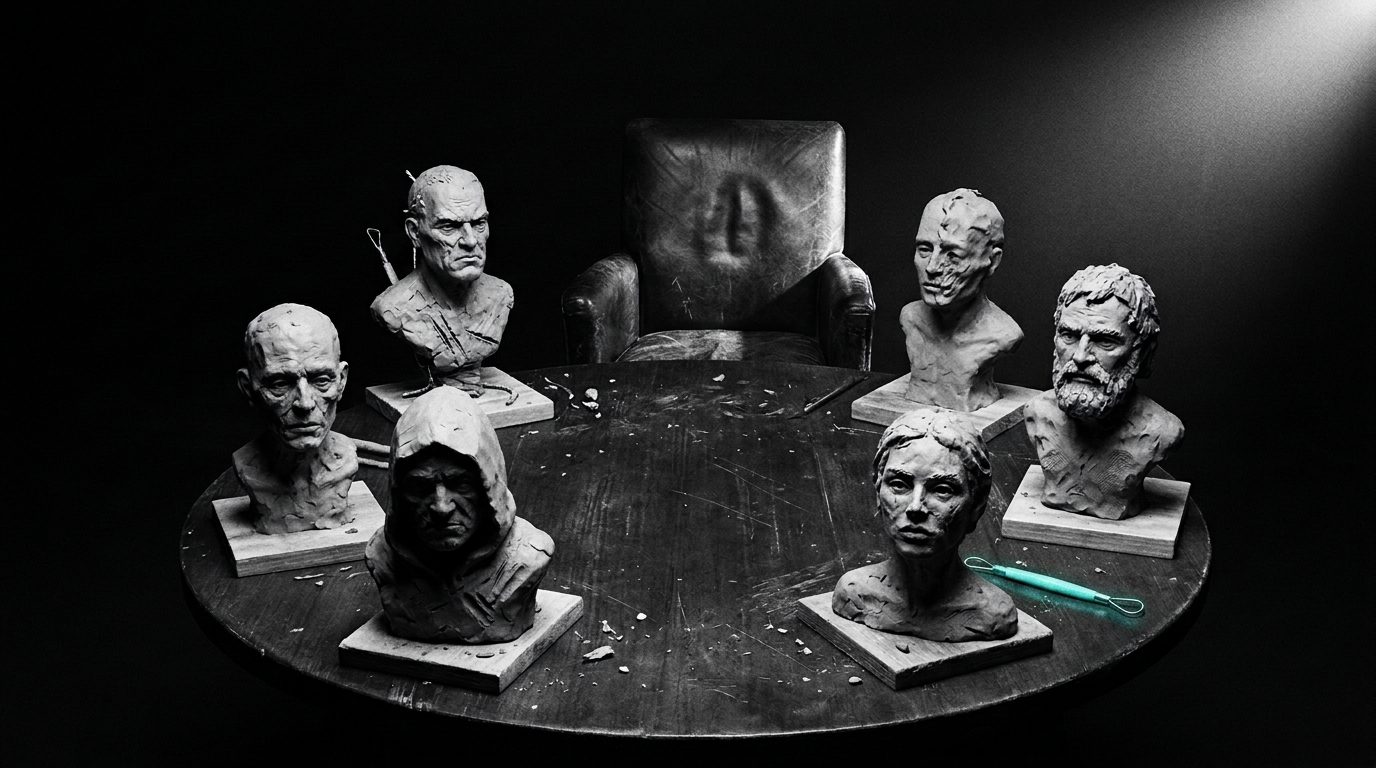
One of the big reveals is the think tank. Together, the leader and I build a small set of Plastic Personas: perspectives they summon to see around corners and catch their own biases and blind spots.
They’re plastic because they change form. A Plastic Persona takes in current events and new knowledge, so it learns and grows and never goes stale. It is artificial, and it is useful. They follow the Pareto principle: a few good ones cover most of the insight a leader needs.
They are lenses, not colleagues, and they never deliver a verdict. The leader still decides what to do with what they hear.
It makes the work harder, on purpose
This is the unpopular part. SuperPosition gives you more to think about, not less: more options, more angles, more ways you might be wrong.
Ease is for the waste. The system carries the remembering, the admin, the formatting and the follow-up. You keep the judgement, the taste and the call. If a change makes your judgement less necessary, it’s moving the wrong way.
How a quarter runs
It’s a one-quarter commitment: roughly ten sessions, one a week. I work alongside one leader, and we set it up slowly. The system incrementally takes on more responsibility, one job at a time, and only when the leader is ready for it.
A few things don’t change:
- The leader owns everything. It lives in plain files on their own laptop, with a record of every decision.
- No black boxes. Every change is shown before it’s saved. If something can’t be explained in plain words, it doesn’t belong.
- Real names stay on the laptop. A privacy wall swaps a client’s name for a stand-in before anything reaches the AI.
- Never-store comes first. Before the system learns anything, the leader says what it is never allowed to know.
What broke
The first client is an executive coach, and the beta is still running. Her first interview found eighteen steps in her week that she had never written down. She built her think tank herself.
Plenty went wrong too. The backup took five tries, so now the system sets it up and she just says yes. My technical words leaked into hers, so they’re banned from anything she reads. Editing a text file was too hard, so I built a form. I keep a list of every moment she got stuck, and I count each one as a failure of the design, never of the person.
What still needs a human hand
Almost everything that matters. SuperPosition keeps context, drafts, reminds and records. The Plastic Personas offer angles. The leader decides what’s true, what’s private and what’s worth doing.
AI is never a replacement for experience, wisdom and judgement. The point is more of you, not less.